

BugMojo vs Sentry: Bug Capture & MCP vs Production Error Monitoring
Sentry aggregates production runtime exceptions; BugMojo captures human-reported front-end bugs with rrweb replay and hands them to AI agents over MCP. Both ship an MCP server, so the real question is what the agent reads.
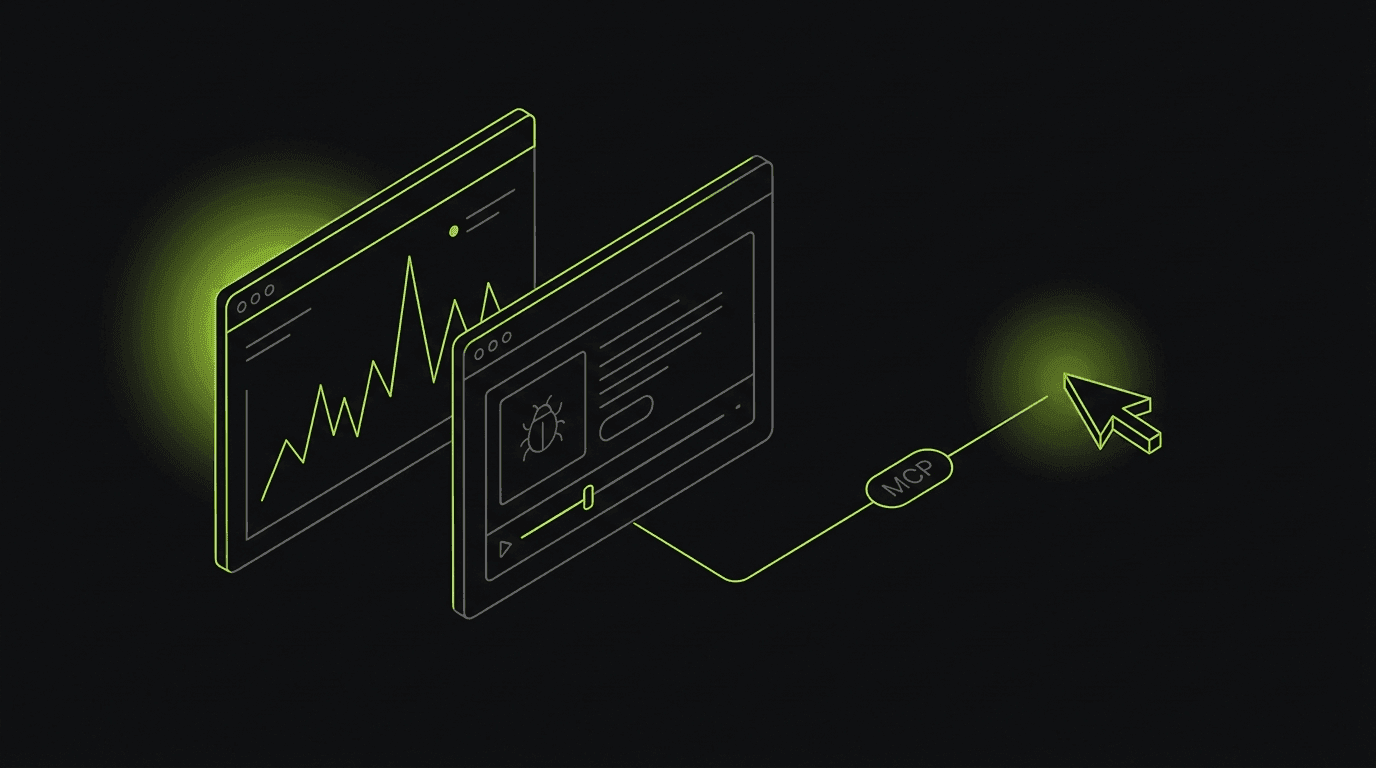
Most "BugMojo vs Sentry" comparisons get the category line wrong before they reach the feature table. They treat the two as head-to-head bug trackers and score them on one rubric. They are not the same kind of tool. Sentry watches your deployed code throw and aggregates those exceptions across releases. BugMojo captures the bug a human reports (a tester, a designer, a support agent, a PM) with a full reproduction attached. They sit on opposite halves of the same loop.
This piece draws that line first, puts real 2026 pricing next to it, and then handles the dimension every other page either skips or gets factually wrong: the AI-agent angle. Plenty of comparison posts imply the competitor has "no MCP." That is false for Sentry. Sentry shipped an official Model Context Protocol server. So the interesting question is not whether an agent can read your data, but what data it gets to read.
BugMojo vs Sentry in one paragraph
Sentry is production error monitoring: an SDK in your shipped app reports exceptions, stack traces, and performance traces, grouped into trackable issues with alerting and release health. BugMojo is front-end bug capture: a browser extension records one human-reported bug as an rrweb replay plus console, network, and a screenshot. Both expose an MCP server to AI agents, but they feed those agents different data. Most teams run both.
One clarification before the details. Sentry is not only error monitoring; its platform also bills tracing, session replay, profiling, logs, and uptime monitoring as separate products. So Sentry even has its own session replay. The difference in intent still holds: Sentry's replay is sampled and triggered automatically to attach context to a detected error, buffering up to a minute of events before the exception and masking all DOM text, images, and input by default. BugMojo's capture is the opposite shape: deliberate, human-initiated, and scoped to a single bug someone chose to report.
The dimension every comparison skips: what the agent reads
Sentry ships an official MCP server with roughly 16 tool calls that can invoke its Seer debugging agent, so AI-agent access is not a Sentry weakness. The real distinction is the data each MCP exposes. Sentry's agent reads aggregated production runtime exceptions and traces. BugMojo's agent reads one human-captured, reproduction-complete front-end bug report. Same protocol, different source feeding the model.
Here is the part most top-ranking pages get wrong: they frame this as MCP-versus-no-MCP. Sentry's official server (getsentry/sentry-mcp) is a real, remote OAuth middleware to the Sentry API, usable from Cursor and Claude Code, and one of its tools invokes Seer for automated root-cause analysis and pull-request fixes. So the MCP row is a genuine tie on existence. The uncontested wedge is one layer down. Sentry's MCP and Seer operate on issues as they arrive in Sentry: aggregated, deduplicated runtime exceptions sampled from real traffic. BugMojo's MCP serves a different object entirely: a single, intentional bug a human reproduced on purpose, packaged with an rrweb DOM replay, the console log, the network waterfall, and a screenshot. When everyone has the plug, the only thing left to compare is what flows through it.
| Feature | BugMojo | Sentry |
|---|---|---|
| Primary job | Front-end bug capture | Production error monitoring |
| Ships an official MCP server | ✓ | ✓ |
| AI agent that proposes fixes | Your agent (Claude Code, Cursor) | Seer |
| What the agent reads | One human-captured reproduction | Aggregated production exceptions + traces |
| Capture trigger | A human clicks the extension | Automatic, error-triggered + sampled |
| Needs an SDK deployed to prod | No | ✓ |
| rrweb DOM session replay per report | ✓ | partial |
| Production exception grouping + alerting | No | ✓ |
| Backend tracing / spans / profiling | No | ✓ |
| Free tier | Yes, up to 5 seats | 5K errors / 50 replays / 1 seat |
| Entry paid plan | $0 | $26/mo (Team) |
Where BugMojo wins
BugMojo owns the stage before an exception ever fires, and the bugs that never throw a clean exception at all. Think of a layout that breaks on mobile, a wrong copy string, a checkout flow that technically completes but confuses every user. None of those trip a runtime error, so Sentry will never surface them. Today they get written up as a vague Jira ticket: "checkout looks broken, idk." BugMojo replaces that with a one-click capture.
- Reproduction-complete reports. One click records an
rrwebDOM replay (an initial snapshot plus MutationObserver-driven incremental deltas), the console log, the network waterfall, and a screenshot, all scoped to the exact bug a human chose to report, not sampled telemetry. - Zero SDK, zero setup. Because capture happens in a browser extension, a QA tester, designer, or support agent can file a full report on any site without shipping instrumentation or touching the build.
- Human-curated, agent-ready. BugMojo's MCP server hands that single, clean reproduction to Claude Code or Cursor. The agent reads a deliberate repro, not a deduplicated pile of runtime noise, so it can draft a fix without a human re-tracing the steps.
- Five seats on the free tier. Testers, designers and support can file bugs, not just engineers, and anyone can open a shared capture link without a seat.
The wedge is the data shape: a curated, repro-ready bug report is a fundamentally better input for an AI agent than aggregated production telemetry when the goal is to fix one specific reported defect.
Where Sentry wins
Be honest: for monitoring shipped applications, Sentry is the mature, better tool, and BugMojo does not try to compete here. Sentry's entire data model is the error event, and a decade of product work is built around it.
- Aggregated production exception monitoring. Sentry ingests thousands of uncaught exceptions across releases, deduplicates them into grouped issues, and tracks regression and release health. BugMojo has no exception-grouping or release-health layer at all.
- Alerting on error spikes. Sentry notifies you when an error rate jumps after a deploy. BugMojo is reactive to human reports, not automated runtime signals.
- Performance and APM tracing. Spans, distributed traces, and profiling are core Sentry; BugMojo has none of this.
- A real free tier for monitoring. Sentry's Developer plan includes 5,000 errors and 50 session replays per month with 30-day retention, enough to instrument a small production app for free.
- Seer. Sentry's AI agent performs automated root-cause analysis and can open pull requests with fixes, operating on issues as they arrive. No human needs to file anything first.
If your sharpest pain is "something is throwing in production and I need to know what, how often, and since which release," Sentry wins outright. BugMojo is not a substitute for that and never claims to be.
Which should you choose
Pick Sentry if your priority is the health of shipped code: aggregating production exceptions across releases, alerting when error rates spike, tracing slow transactions, and letting Seer propose fixes from runtime issues. Its meter is the event (errors, spans, and replays billed separately), so cost tracks your traffic, not your team size.
Pick BugMojo if your priority is the bug a human reports: a reproduction-complete capture (rrweb replay, console, network, screenshot) filed without an SDK, then handed to an AI agent over MCP for triage and fixing. Its free tier covers up to 5 seats, so non-engineers can file bugs too.
Run both if you can, and most serious teams do. They cover different halves of the loop. BugMojo catches the bug a tester reproduces before or outside production; Sentry catches the exception that still slips through to real users. Because both expose an MCP server, the same AI agent can read each tool's slice of context. Compare them by workflow fit, not by a single headline price, because they literally measure different units: runtime error volume versus captured bug reports.
{
  "mcpServers": {
    "sentry":  { "url": "https://mcp.sentry.dev/mcp" },
    "bugmojo": { "url": "https://www.bugmojo.com/api/mcp" }
  }
}
// Same protocol, two sources: aggregated production exceptions (Sentry)
// vs one human-captured, reproduction-complete bug report (BugMojo).Install the free BugMojo extension, record an rrweb replay plus console and network in one click, and hand the reproduction to Claude Code or Cursor over MCP. No SDK, no project setup.
Install the extensionFrequently asked questions
Frequently asked questions
Sources
- Yes, Sentry has an MCP Server (and it's pretty good): 16 tool calls, remote OAuth, invokes the Seer agent, Sentry Blog (2025)
- Sentry pricing (Developer free plan: 5,000 errors/mo, 50 replays/mo, 30-day retention, 1 user; Team from $26/mo), Sentry (2025)
- Sentry Session Replay docs: error-only mode buffers up to 1 minute before the error; masks DOM text, images, and input by default, Sentry (2025)
- Seer product docs: Sentry's AI debugging agent (root-cause analysis, Autofix, PR creation from issues), Sentry (2025)
- getsentry/sentry-mcp: official MCP server; middleware to the Sentry API for coding assistants (Cursor, Claude Code), GitHub (Sentry) (2025)
- rrweb: open-source DOM session replay (initial snapshot + MutationObserver incremental delta events, built-in masking), rrweb / GitHub (2025)
Get bug-tracking insights, weekly.
Engineering deep-dives, QA playbooks, and honest tool comparisons. No spam. Unsubscribe in one click.